Prosto Market is a Telegram mini app for buying electronics with crypto or fiat. I designed the product from scratch to make product discovery, checkout, delivery, and post-purchase actions feel fast and natural inside Telegram.
Scope
UX/UI design, Product strategy, Design system
Time
December 2025 - April 2026
Role
Product designer
Team
Product designer, PM, Frontend, Backend
Tags
Mobile
0 > 1
Design system
0 → 1
commerce mini app launch
rewards, roulette, referrals
developer-ready
UI kit and handoff
Goal
The business goal was to launch an electronics store inside Telegram, where users could browse products, place orders, pay with crypto or fiat, and track delivery without leaving the app. The main challenge was to design a complete commerce experience from scratch while keeping it simple, fast, and realistic for development.
Constraints
Launching fast without reinventing
The product had to work as a Telegram mini app, so every flow needed to feel compact, fast, and mobile-first. I had to keep navigation simple, avoid heavy interactions, and make key actions visible within a limited screen space.
Another constraint was launch readiness: the design had to be realistic for development, cover the main shopping scenarios, and support both crypto and fiat payment logic without making checkout feel overloaded.
Research
Instead of a long research phase, I focused on studying Telegram mini app patterns, mobile commerce flows, and crypto payment experiences. The goal was to understand which familiar patterns could be reused, where Telegram creates limitations, and how to make shopping feel natural in a compact mobile interface.
I also benchmarked electronics stores, marketplace apps, and Telegram-based products to compare how they structure catalogs, product cards, checkout, order tracking, and promotional mechanics. This helped me separate what should feel familiar from what needed to be adapted specifically for Telegram.
The key insight was that users should not feel like they are learning a new product. The experience needed to follow familiar commerce logic: browse products, compare options, choose details, place an order, and return later for delivery or rewards.
This helped me prioritize clear navigation, simple product cards, a focused checkout flow, and lightweight engagement mechanics
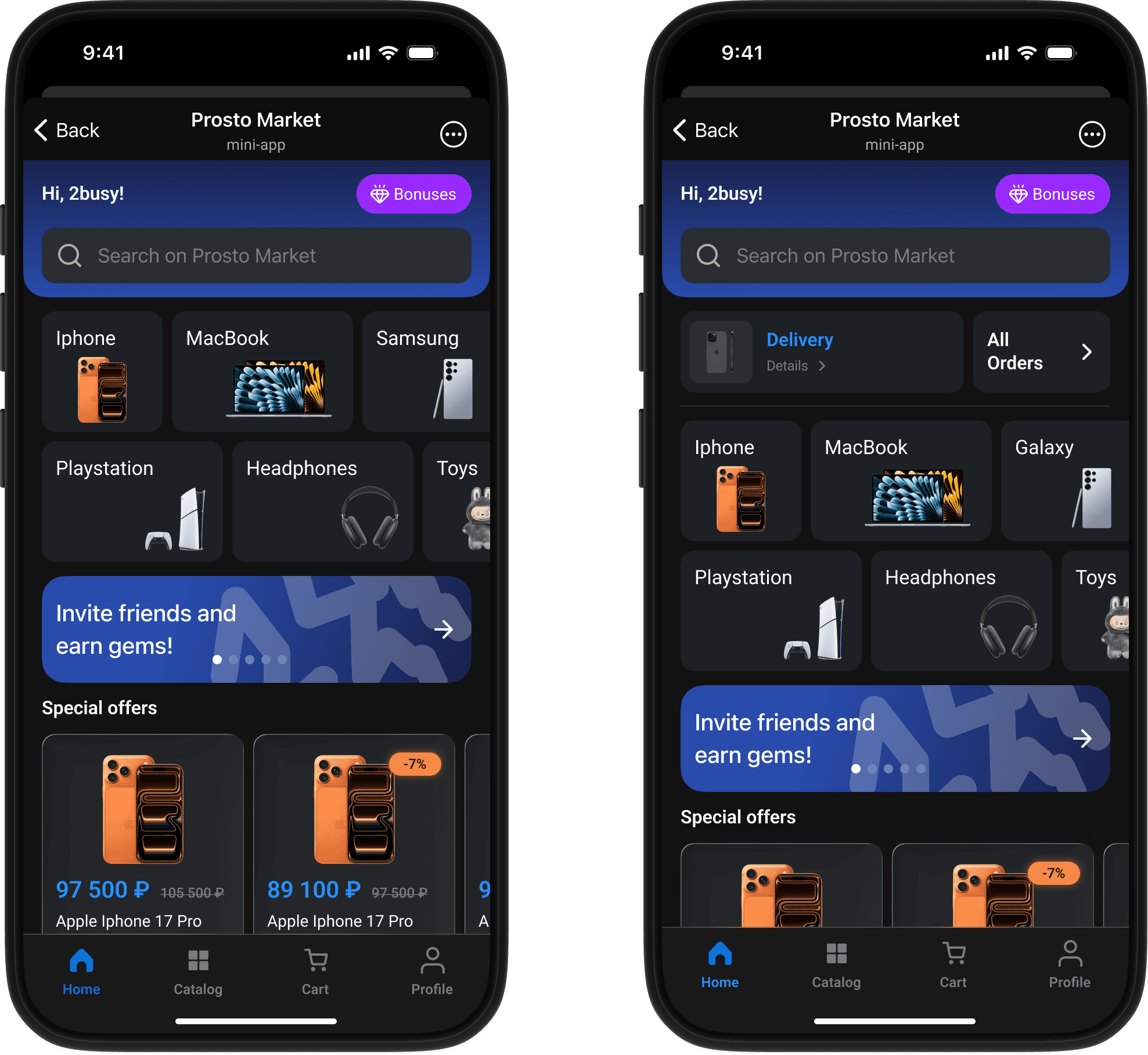
Home as a fast shopping and order hub
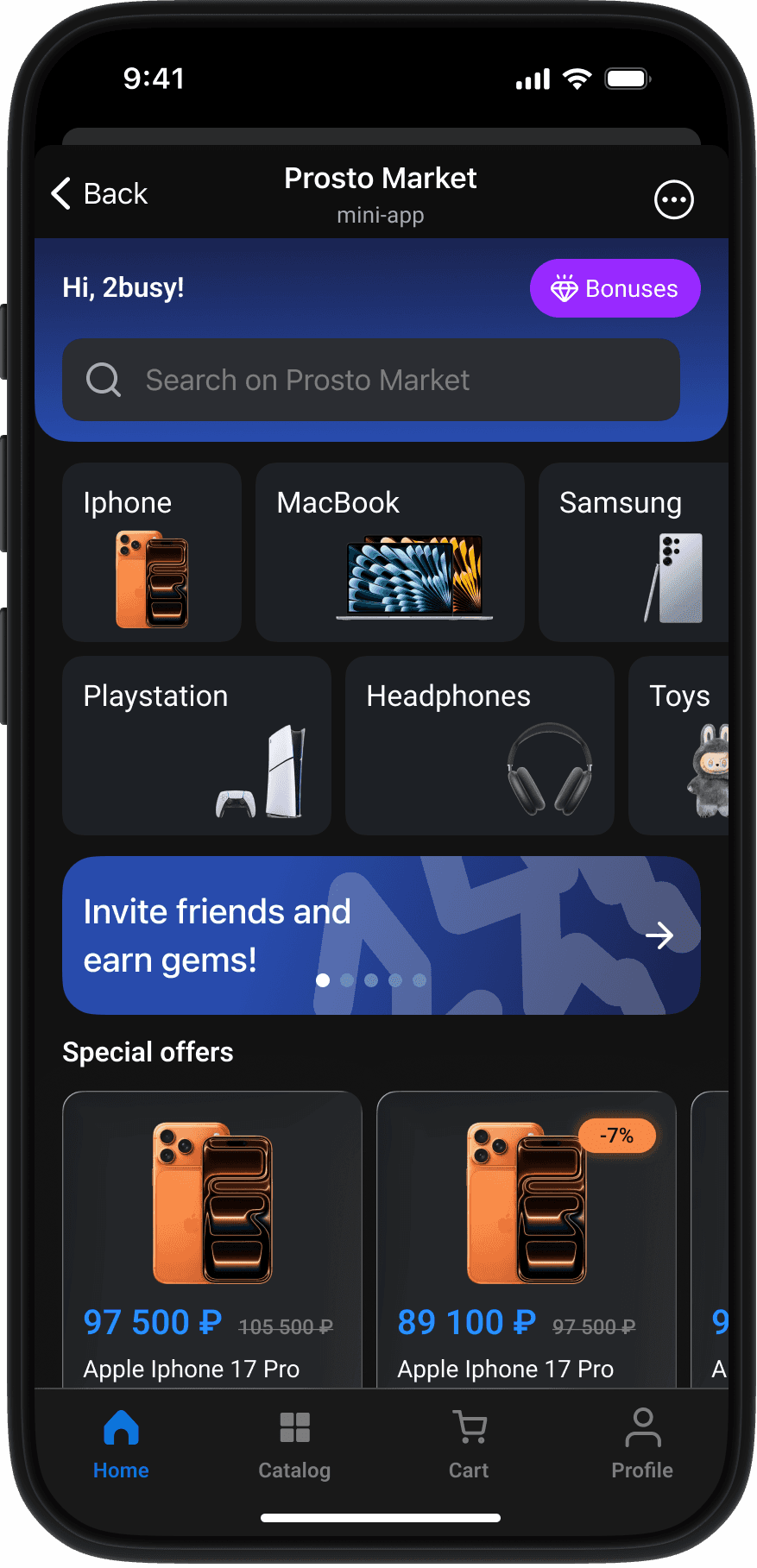
Designed the home screen as the main entry point into the mini app, combining product discovery with quick access to active orders. Users can immediately browse categories, search products, and continue post-purchase actions from the same screen.
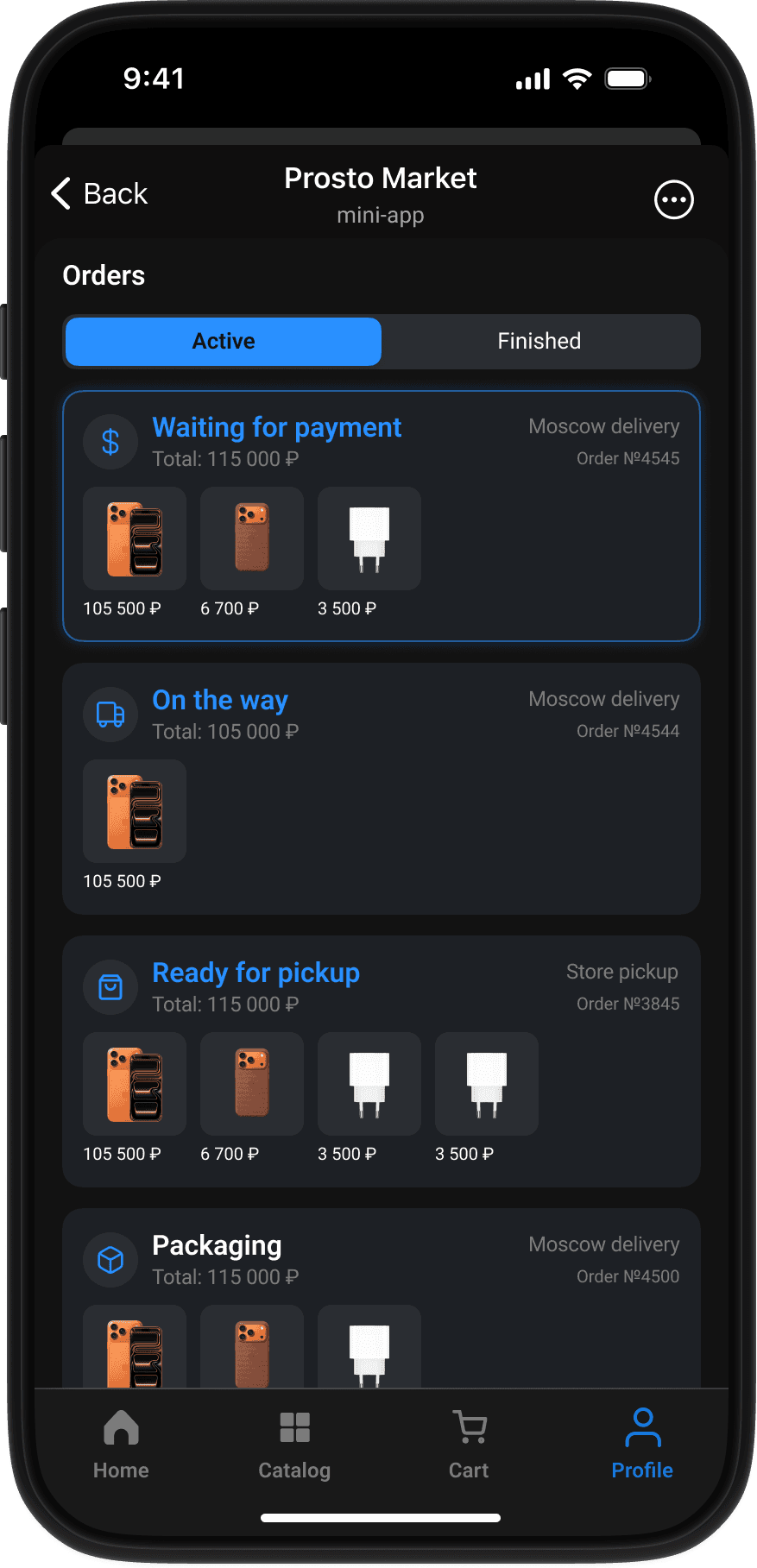
Added a dedicated active orders block to surface ongoing deliveries directly on the home page. This allows returning users to instantly check order status and reopen delivery-related actions without going through extra navigation.
Process
While working on Prosto Market, the team and I collaborated closely on a daily basis. The process was highly iterative and fast-paced - closer to a sprint or hackathon than a traditional product cycle. We moved quickly through ideas, tested directions in real time, and refined the product continuously as it evolved.
In such a fast environment, different perspectives naturally came up. When priorities or solutions were unclear, I helped ground decisions through UX logic, business value, and implementation feasibility. This made discussions more objective, helped us align faster, and allowed the product to move forward without losing momentum.
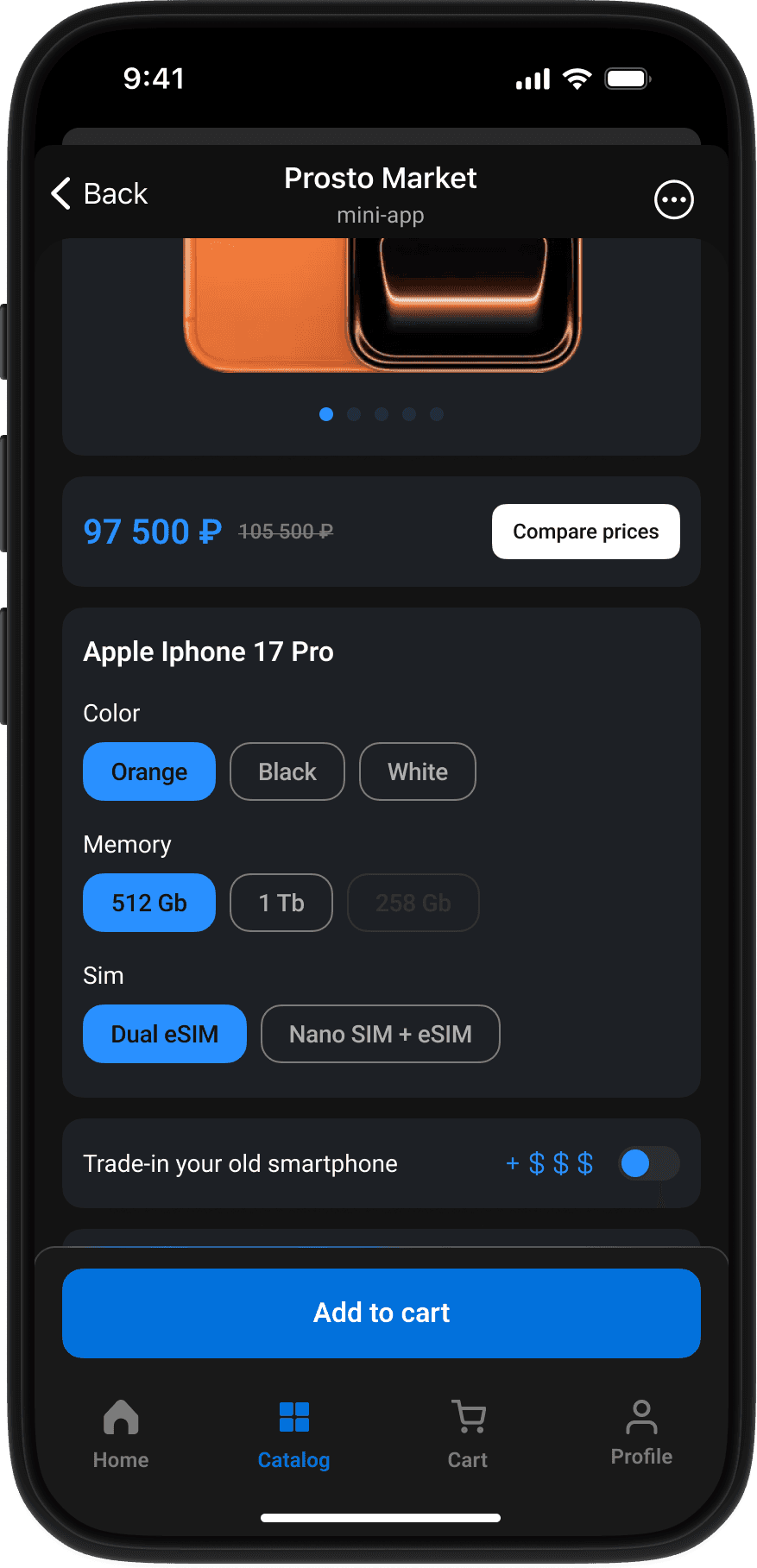
Designed the product page as the main space for choosing and configuring a product before purchase. Instead of pushing all variations into the catalog, key characteristics were moved into the product page, where users can make decisions with more context and less visual overload.
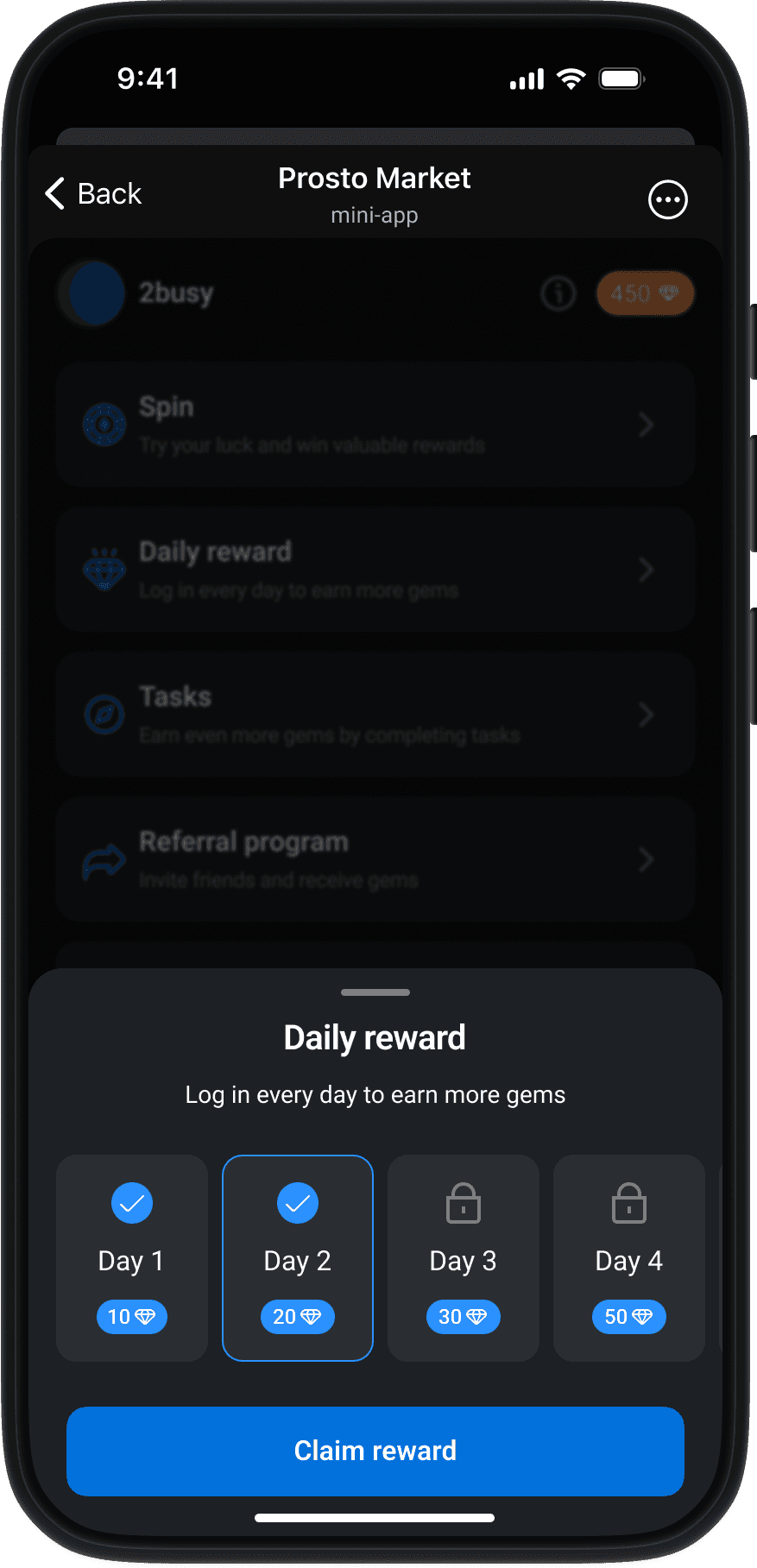
Used familiar gamified mechanics to make the experience more dynamic without distracting from the core commerce flow. The goal was not to overload the product, but to introduce small engagement points that increase activity and strengthen long-term retention.
Each mechanic creates a reason to come back — daily rewards for short cycles, tasks for deeper interaction, and referrals for growth loops.
Each card was designed with a clear hierarchy of content, actions, and states. Whether it shows a product, an order, a category, or a bonus mechanic, the structure stays familiar, which reduces cognitive load and helps users understand the interface faster.
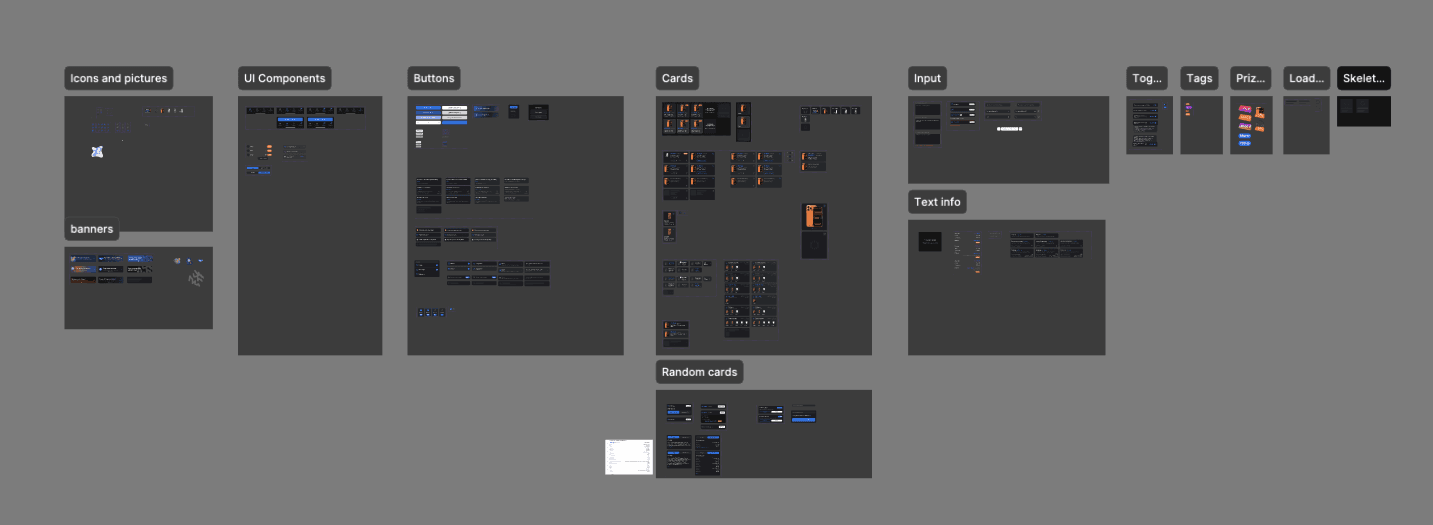
UI kit as a foundation for fast delivery
Built a structured UI kit and design system to support rapid development and ensure consistency across the product. It covered core components, states, and patterns needed for the MVP and future scaling.
The frontend team highlighted the clarity and usability of the system, especially in terms of component structure and consistency. This improved collaboration and reduced back-and-forth during implementation.